



Supply Chain Technology: A Strategic Tool that Revolutionize Any Brand
Supply chain technology platforms now command substantially higher valuations than traditional point solutions. Platform companies have achieved a median market cap of $26.4B. Traditional SaaS companies trail behind at just $4.1B. This remarkable value gap shows a radical alteration in how businesses have managed supply chains in 2025, especially as digital supply chain transformation accelerates. The global SaaS market has reached $390 billion in 2025.
Companies now recognize the strategic advantage that integrated platforms offer over standalone tools, especially in modern supply chain software ecosystems.
The gap goes beyond market capitalization. Private companies’ SaaS valuation multiples range from 3x–10x ARR, while public companies see 7x–12x. Platform business models continue to demand premium valuations. This becomes more evident especially when you have supply chain operations where companies use digital platforms to connect different planning functions and enable end-to-end visibility. These connections work both internally and externally. Supply chain platforms also enable agile and responsive operations through advanced analytics, machine learning, and AI. These technologies revolutionize how companies forecast, spot disruptions, and improve supply chain visibility (including real-time logistics tracking and demand planning).
This piece gets into the widening gap between platform and point solutions in supply chain technology. It reveals the metrics behind their valuation differences and shows how businesses can maximize ROI through platform-based approaches in today’s digital supply chain transformation.
Understanding the Platform vs. Point Solution Divide in Supply Chain Tech
The difference between platforms and point solutions shapes today’s supply chain technology landscape. A clear understanding of these basic differences helps explain the valuation gap mentioned earlier, particularly in the context of supply chain optimization strategies.
Definition of Supply Chain Platforms vs. Point Solutions
Point solutions are specialized software applications that solve one specific problem in supply chain operations. These tools excel at handling targeted issues like inventory tracking or supplier management but work independently. Supply chain platforms offer detailed capabilities that cover multiple functions throughout the supply chain lifecycle. These integrated systems create a unified environment where various processes blend naturally (from procurement to production to logistics). This eliminates the need to use multiple separate tools.
Core Differences in Architecture and Integration
Each approach’s architectural foundation reveals significant operational implications. Point solutions work in isolation and create data silos that fragment an organization’s workflows. This fragmentation results in limited visibility across the supply chain development of lifecycles and slower responses to disruptions. Gartner reports that almost two-thirds of U.S. businesses faced direct effects from software supply chain attacks. This highlights the security risks of fragmented systems within supply chain software stacks.
Supply chain platforms centralize data into a single source of truth. The integration provides cross-functional visibility, cuts down duplicate work, and helps teams spot risks faster. These platforms also optimize processes through automation and enhance efficiency and collaboration between departments, supporting more advanced control towers and integrated planning environments.
Examples of Platform and Point Solution Use Cases
Point solutions add value to specific supply chain functions like space management, energy management, or lease accounting. Companies with simple, clear needs limited to specific functional departments can benefit from these targeted tools (especially in early-stage digital supply chain maturity).
Supply chain platforms excel when businesses need detailed management across multiple processes. To cite an instance, see manufacturers who want to unify compliance reporting, product design, risk management, and customer request handling – they benefit from the platform approach. Platform solutions also let organizations build custom workflows that replace repetitive, manual processes in supply chain operations, improving end-to-end process efficiency.
The choice between these approaches depends on organizational maturity and specific business requirements. More mature enterprises prefer best-of-breed solutions, sometimes using separate vendors for execution and planning. Less mature organizations tend to prefer fewer vendors due to limited implementation of resources.
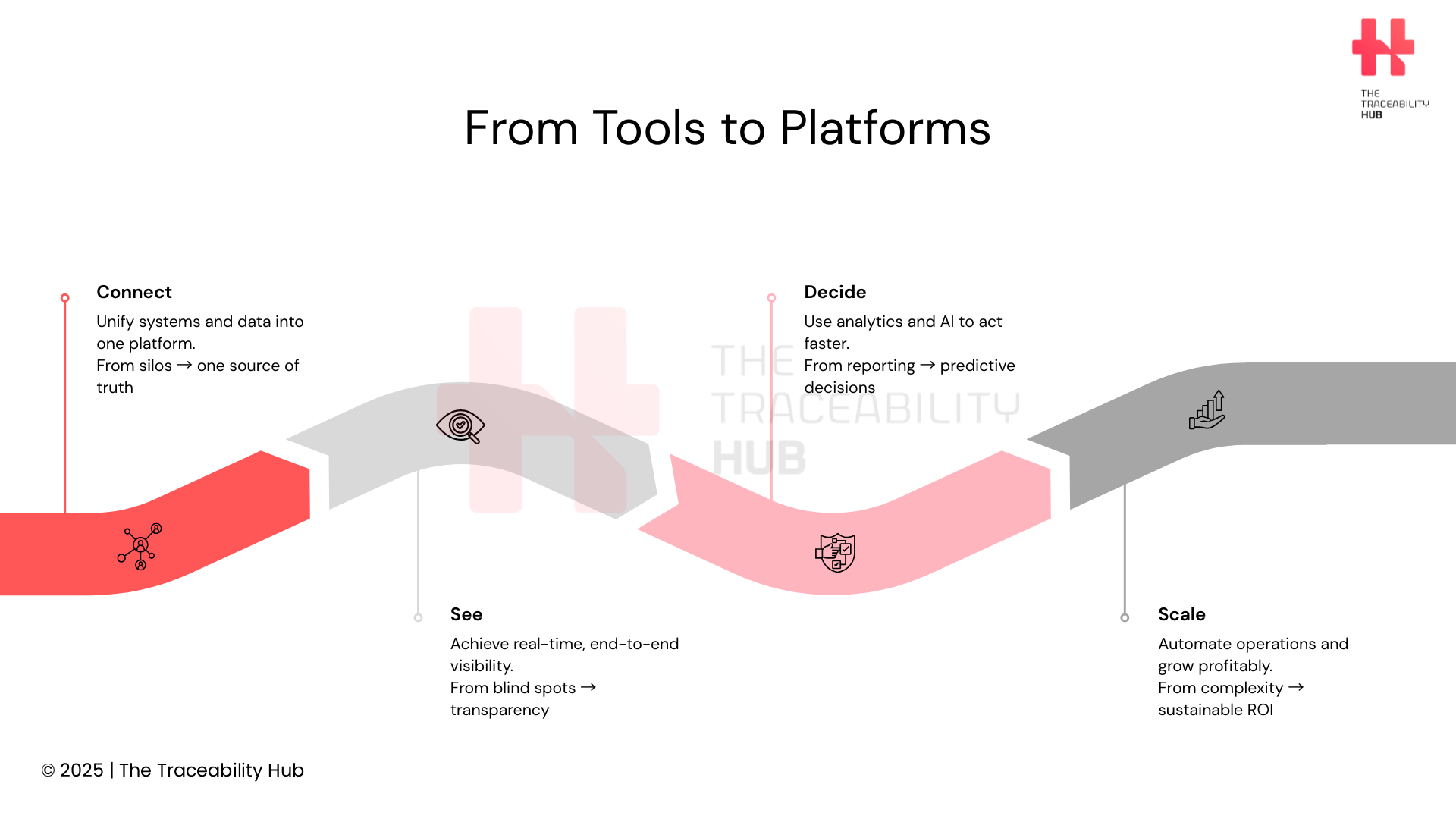
From Tools to Platform
Key Metrics That Reveal the Value Gap
The differences between platforms and point solutions show big gaps in how long-term value they create in supply chain operations. These numbers tell us why smart organizations now prefer integrated approaches over specialized tools, especially as supply chain optimization becomes more data driven.
Supply Chain Platform Scalability vs Feature Depth in Point Tools
Supply chain platforms grow better with your business without needing extra solutions. To name just one example, Datup handles large amounts of data from complex portfolios in multiple locations. This means organizations can grow their capabilities without adding new systems. Point solutions work well at first but struggle to scale because they can’t add new features quickly to fix new problems. These tools work alone despite their special features. This creates bottlenecks that slow down growth (especially in global supply chain networks).
Total Cost of Ownership: Platform Bundles vs Standalone Tools
Platforms save more money over time. Point solutions seem cheaper at first, but their total costs go up because of several reasons:
- Systems need expensive connections between them
- Staff need training for each tool
- You pay multiple license fees
- Data needs manual checking
Research shows that 84% of buyers want one tool to fix multiple business problems instead of managing several solutions. People prefer this because scattered systems often cost more than unified platforms that support digital supply chain workflows.
Impact on Data Visibility and Decision-Making Speed
The biggest advantage of platforms is how they bring all data together. Companies waste time putting together reports from separate systems as they grow. Platforms give what experts call a “single source of truth.” This leads to better business insights and simpler automation.
A good supply chain visibility platform combines up-to-the-minute tracking, data quality, alerts, and processes. This changes how problems get solved – from reacting to controlling them. Control Towers on platforms do more than show information. They help manage things better by automating routine tasks and connecting data feeds to give useful insights. This complete approach helps companies make faster decisions and respond better, even in complex supply networks.
Valuation Benchmarks and Market Trends in 2025
Valuation data from 2025 shows clear differences in how markets value platform-based and point-solution supply chain technologies in various sectors.
SaaS Valuation Multiples for Platform vs Point Solutions
Platform-based supply chain solutions earn premium valuations compared to standalone tools. Multiproduct software businesses achieved better revenue multiples, market capitalizations, and superior free cash flow margins in 2025. Technology-driven firms’ enterprise valuations range between 1x and 46x revenue, while traditional point solutions trade at lower multiples. The median SaaS company’s valuation is around 4.7x EV/Revenue, but top-performing platforms reach 8.2x or higher, a reflection of their role in enabling digital supply chain ecosystems.
Tech Valuation 2025: Investor Priorities and Trends
Supply chain technology saw renewed venture capital interest in 2025. Deal value jumped 26.1% quarter-over-quarter to $3 billion, a 28% year-over-year increase. Private equity firms and strategic acquirers actively pursued companies in fast-growing software verticals. Companies earned higher valuations by integrating AI capabilities that drove operational improvements and predictive insights. Investors now favor sustainable profitability overgrowth-at-all-cost strategies and reward companies with predictable revenue, low churn, and strong net revenue retention.
Industry-Specific Multiples: Logistics, Retail, and Manufacturing
Each sector shows distinct valuation patterns. Manufacturing EBITDA multiples for private companies vary from 6.9x to 11.1x based on company size and specialty. Transportation and logistics firms saw their median TEV/EBITDA multiples drop to 10.44x from 11.46x. Digital freight management companies, automation-driven 4PL services, and AI-powered supply chain solutions command higher valuations. Investors value businesses that blend automation with data analytics, robotics, and modern supply chain optimization software.
How to Maximize ROI with Platform-Based Supply Chain Tech
Supply chain technology’s return on investment reaches its peak through strategic implementation in four main areas.
Reducing Churn and Improving Retention with Unified Platforms
Unified supply chain platforms substantially reduce customer churn by creating seamless experiences. Studies show that existing customers generate 65% of a company’s business. This makes customer retention vital for growth. A mere 5% increase in retention can boost profits by up to 95%. Companies lose 70% of their customers who feel neglected. Platform-based solutions eliminate fragmentation that frustrates users by delivering consistent service at every touchpoint across the digital supply chain.
Making Use of Information-Driven Platforms for Predictive Analytics
Information-driven platforms change reactive operations into proactive management through:
- Increased forecast accuracy and metrics like inventory turns
- Live disruption identification (e.g., weather-related delays)
- End-to-end integration showing how decisions affect the supply chain
These capabilities create what industry experts call a “single coherent view” of operations. This enables smarter decision-making through AI-driven analytics and scenario planning.
Building Adaptable Customer Acquisition with Platform Ecosystems
Platform ecosystems boost customer acquisition by unifying commercial strategies. Organizations that implement multithreaded commercial participation outperform competitors by 50%. B2B sales organizations will shift from intuition-based to analytical decision making by 2026, reaching 65% adoption, largely due to better data integration within supply chain platforms.
Using Supply Chain Automation Software to Improve Efficiency
Supply chain automation software delivers immediate efficiency gains. To cite an instance, a last-mile operator managing 10,000+ vehicles saved $30-35 million by implementing virtual dispatcher agents. Companies that use automation technology experience 56% fewer errors in forecasting and inventory tracking tasks.
A New Approach to Tech Integration
The huge valuation gap between supply chain platforms and point solutions shows how businesses have changed their approach to tech integration. Supply chain platforms are worth much more because they tackle system-wide challenges instead of isolated problems. These platforms help organizations optimize operations, minimize data silos, and boost visibility throughout the supply chain ecosystem.
Market trends in 2025 show that investors prefer integrated solutions. Platforms perform better than point solutions in every key metric – from expandable solutions and budget-friendly options to data visibility and faster decisions. This performance gap explains why platform companies are worth six times more than their point of solution counterparts.
Businesses need to think about their specific needs when choosing supply chain technology. Point tools work well for solving specific problems in less mature businesses with basic needs. Platforms give better long-term value through unified data, cross-functional visibility, and automation. They also eliminate fragmentation that frustrates users and causes customer churn.
Companies that understand platforms’ strategic value will thrive. Those using these integrated systems retain more customers, predict outcomes better, and work more efficiently. Supply chains are becoming more complex, and platforms’ unified environment isn’t just helpful – it’s crucial to stay competitive globally.
Supply chain technology platforms do more than just run operations – they are strategic tools that revolutionize how businesses handle relationships, spot disruptions, and create value. Their premium valuations reflect a simple truth: integrated systems create far more value than separate solutions working alone.
Read more: The Evolving CPG Consumer Packaged Goods Industry: Trends, Growth Drivers & the Digital Future