



RECY:CHECK: The New Standard for PPWR Packaging Compliance
The Food and Beverage Carton Alliance (FBCA), which represents leading global beverage carton manufacturers, has introduced RECY:CHECK, a science-based recyclability assessment protocol for fiber-based composite packaging (FBCP), including food and beverage cartons. The methodology evaluates packaging performance across key circular stages — collection, sorting, reprocessing, and secondary material application — providing a structured technical framework to assess how cartons perform within existing recycling systems. While RECY:CHECK is not a regulatory instrument, it aligns with the objectives of the European Union’s Packaging and Packaging Waste Regulation (Regulation (EU) 2025/40), which introduces stricter recyclability performance requirements. The protocol is designed to support packaging designers, brand owners, recyclers, and policymakers by offering a harmonized approach to recyclability evaluation, thereby facilitating compliance readiness and advancing circular economy practices within global food packaging value chains.
Raising the Bar for Recyclable Food Packaging
How RECY:CHECK Aligns with EU Packaging Waste Regulations
The European Union’s Packaging and Packaging Waste Regulation (Regulation (EU) 2025/40) represents a significant shift in packaging governance across the EU, introducing harmonized requirements on recyclability, waste reduction, and recycled content. The Regulation entered into force in February 2025 and will apply from August 2026, with phased obligations extending toward 2030 and beyond. Among its key objectives are binding packaging waste reduction targets of 5% by 2030, 10% by 2035, and 15% by 2040 compared to 2018 levels, as well as strengthened recyclability performance criteria and recycled content mandates for certain packaging categories.
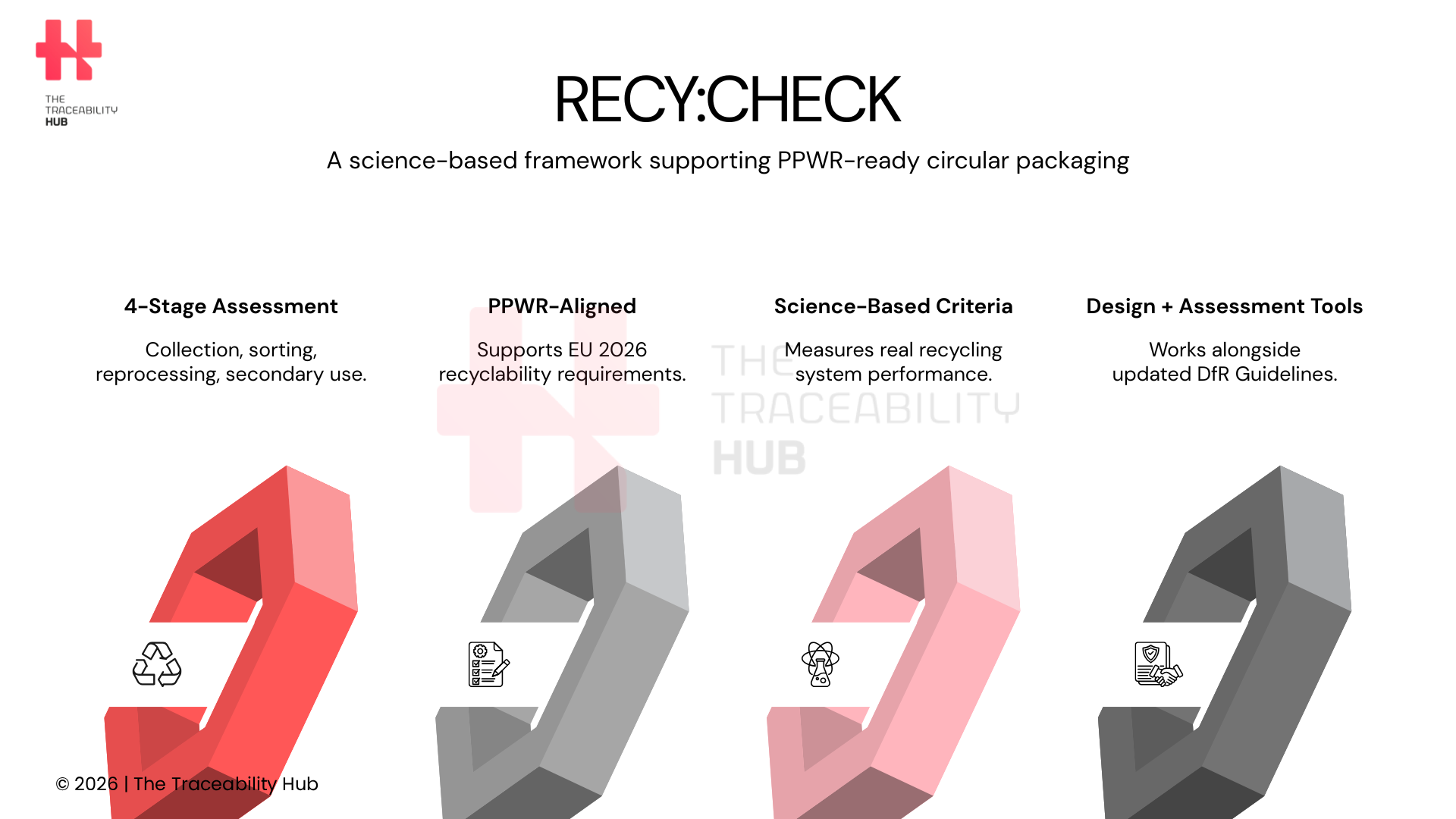
The Food and Beverage Carton Alliance (FBCA) developed RECY:CHECK as a science-based recyclability assessment protocol for fiber-based composite packaging (FBCP), including food and beverage cartons. The methodology evaluates packaging performance across four circular economy stages — collection, sorting, reprocessing, and secondary material application — aligning conceptually with the recyclability performance approach embedded in the PPWR. While RECY:CHECK is not a regulatory certification nor officially mandated under EU law, it provides a structured technical framework that can support manufacturers in demonstrating recyclability readiness under the Regulation’s evolving criteria.
The PPWR also introduces increasing recycling performance targets by material stream and recycled content requirements for plastic packaging, including plastic components used in composite formats such as beverage cartons. In this regulatory environment, assessment tools like RECY:CHECK can assist packaging designers, brand owners, recyclers, and policymakers in evaluating technical compatibility with recycling systems and preparing for compliance obligations. As noted by FBCA leadership, the objective is to create harmonized recyclability evaluation practices within the carton sector, contributing to greater transparency and regulatory preparedness across the food packaging value chain.
What Makes RECY:CHECK A Gamechanger for Sustainable Packaging
RECY:CHECK introduces a structured, science-based methodology for assessing the recyclability of fiber-based composite packaging (FBCP), including liquid packaging cartons. Developed by the Food and Beverage Carton Alliance (FBCA), the protocol evaluates recyclability across key technical stages in alignment with existing industrial recycling processes. Rather than relying solely on theoretical design assumptions, the framework applies measurable performance criteria to assess how packaging behaves within established recovery systems.
While RECY:CHECK is a sector-specific initiative for carton packaging, it is conceptually aligned with broader recyclability evaluation frameworks such as RecyClass, which focuses on plastic packaging streams. This alignment supports comparability across material categories while recognizing the distinct structural characteristics of composite carton formats.
The protocol was developed with input from industry experts and stakeholders across the carton value chain, including material suppliers and recycling specialists. Its purpose is to provide a harmonized assessment approach that enables packaging manufacturers to document recyclability performance and allows recyclers to evaluate material compatibility more consistently.
Beyond regulatory alignment, RECY:CHECK contributes to circular economy objectives by promoting standardized recyclability evaluation practices. By supporting clearer technical criteria and transparent assessment methods, the framework assists designers, producers, recyclers, and policymakers in making informed decisions regarding packaging design and end-of-life management.
FBCA Empowers the Packaging Industry with New Tools
The Food and Beverage Carton Alliance (FBCA) has released an updated edition of its Design for Recycling (DfR) Guidelines for liquid packaging cartons, complementing the RECY:CHECK recyclability assessment protocol. These guidelines provide technical recommendations to support the design of cartons compatible with established fiber recovery mills and downstream PolyAl processing technologies. They aim to assist packaging developers in selecting materials and structural configurations that enhance recyclability within existing infrastructure.
The DfR Guidelines and RECY:CHECK function as complementary tools. While RECY:CHECK provides a structured recyclability assessment methodology, the DfR Guidelines offer technical design criteria that manufacturers can use to evaluate and improve packaging performance. Together, they form a technical reference framework supporting improved recyclability across the carton value chain.
These resources are relevant for multiple stakeholders, including packaging designers and brand owners seeking to enhance recyclability, recyclers assessing material compatibility, and Producer Responsibility Organizations (PROs) and policymakers involved in collection system planning and regulatory development.
The guidelines are periodically updated to reflect evolving recycling technologies, regulatory developments, and industry best practices. FBCA coordinates this technical work through its internal expertise structures, supporting harmonized recyclability assessment within the fiber-based carton sector.
Through these initiatives, FBCA contributes to standardized evaluation approaches that aim to improve transparency, foster technical innovation, and support circular economy objectives in food and beverage carton packaging.
Sustainable Food Packaging: RECY:CHECK & Design for Recycling
RECY:CHECK introduces a structured, science-based methodology for assessing the recyclability of fiber-based composite packaging, including liquid food and beverage cartons. Developed by the Food and Beverage Carton Alliance (FBCA), the protocol provides a technical framework that enables companies to evaluate packaging performance across key recycling stages, including collection, sorting, reprocessing, and secondary material applications.
While RECY:CHECK is not a regulatory instrument, it aligns with the objectives of the European Union’s Packaging and Packaging Waste Regulation (Regulation (EU) 2025/40), which introduces stricter recyclability and circularity requirements. By offering a harmonized assessment approach, the framework can support manufacturers in preparing for evolving compliance obligations.
FBCA, complements RECY:CHECK with updated Design for Recycling (DfR) Guidelines. These guidelines provide technical recommendations for packaging design, material selection, and compatibility with fiber recovery mills and PolyAl processing technologies. Together, the tools form a practical reference system for improving recyclability within existing infrastructure.
As regulatory expectations increase across global markets, structured assessment methodologies such as RECY:CHECK can help stakeholders — including packaging designers, recyclers, brand owners, and policymakers — apply consistent evaluation criteria. Although initially aligned with European regulatory developments, the technical principles underpinning the framework are relevant to broader circular economy discussions worldwide.
Challenges remain, particularly as recycling infrastructure and material technologies continue to evolve. However, regularly updated technical guidance and standardized evaluation methods contribute to improved transparency and more informed packaging design decisions. In this context, RECY:CHECK and the accompanying DfR Guidelines represent a sector-led effort to support circular packaging development while maintaining essential food protection and safety functions.
Read more: How Digital Leaflets Meet EU 2026 Compliance Requirements