


How Unit-Level Track and Trace Improves Supply Chain Visibility and Traceability
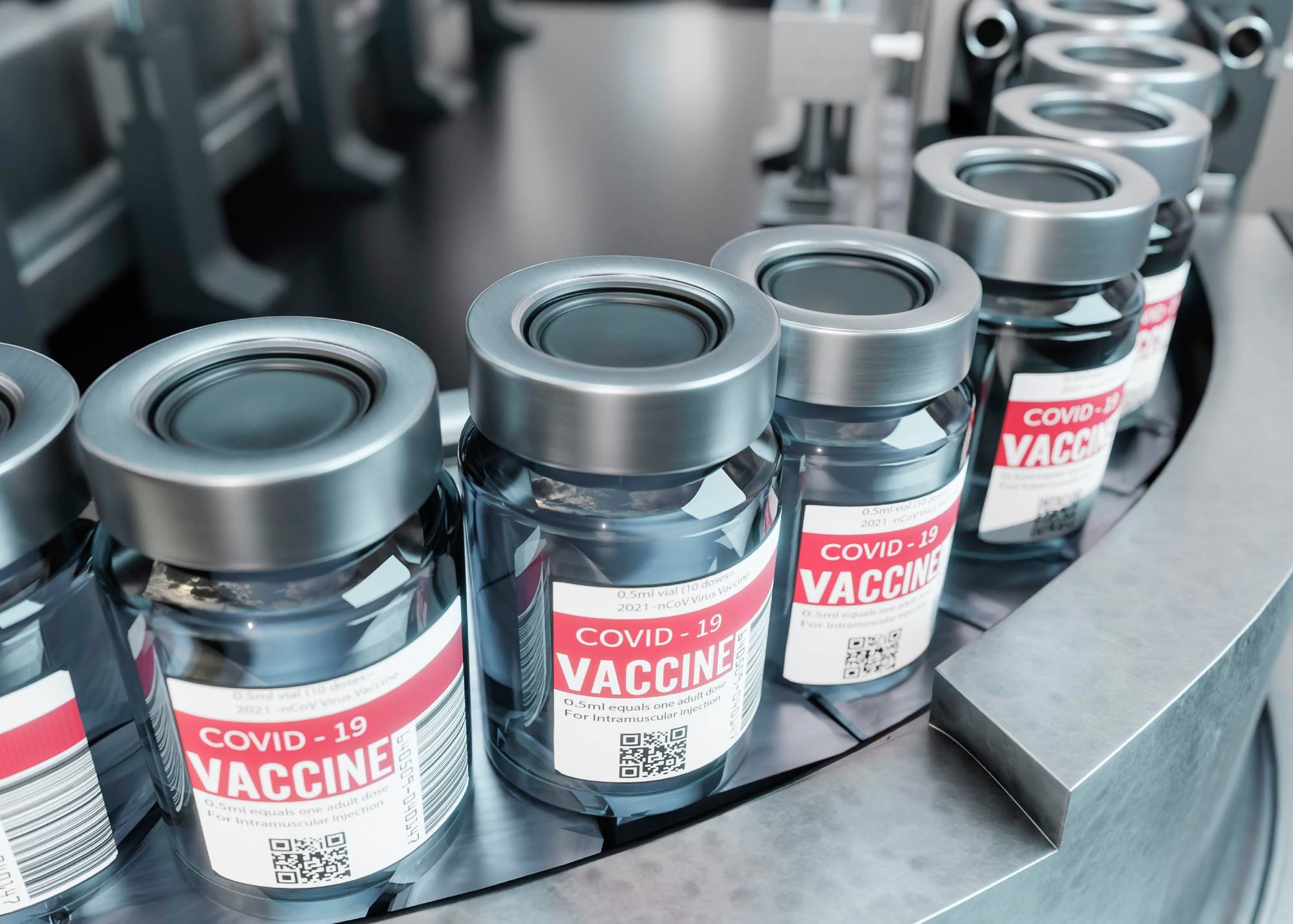
Counterfeit pharmaceuticals represent a major threat to global healthcare systems and pharmaceutical supply chains. Estimates suggest the global counterfeit medicine market may be worth between 200 billion and 432 billion US dollars annually, making it one of the most profitable forms of illicit trade worldwide. Pharmaceutical manufacturers alone are estimated to lose up to 200 billion US dollars each year due to counterfeit drugs entering legitimate distribution channels.
These supply chain vulnerabilities highlight the need for stronger visibility and traceability systems to protect both brand integrity and patient safety. Traditional batch-level tracking methods often fail to provide the granular visibility required to identify diversion, detect counterfeits, or monitor product movement across complex global logistics networks.
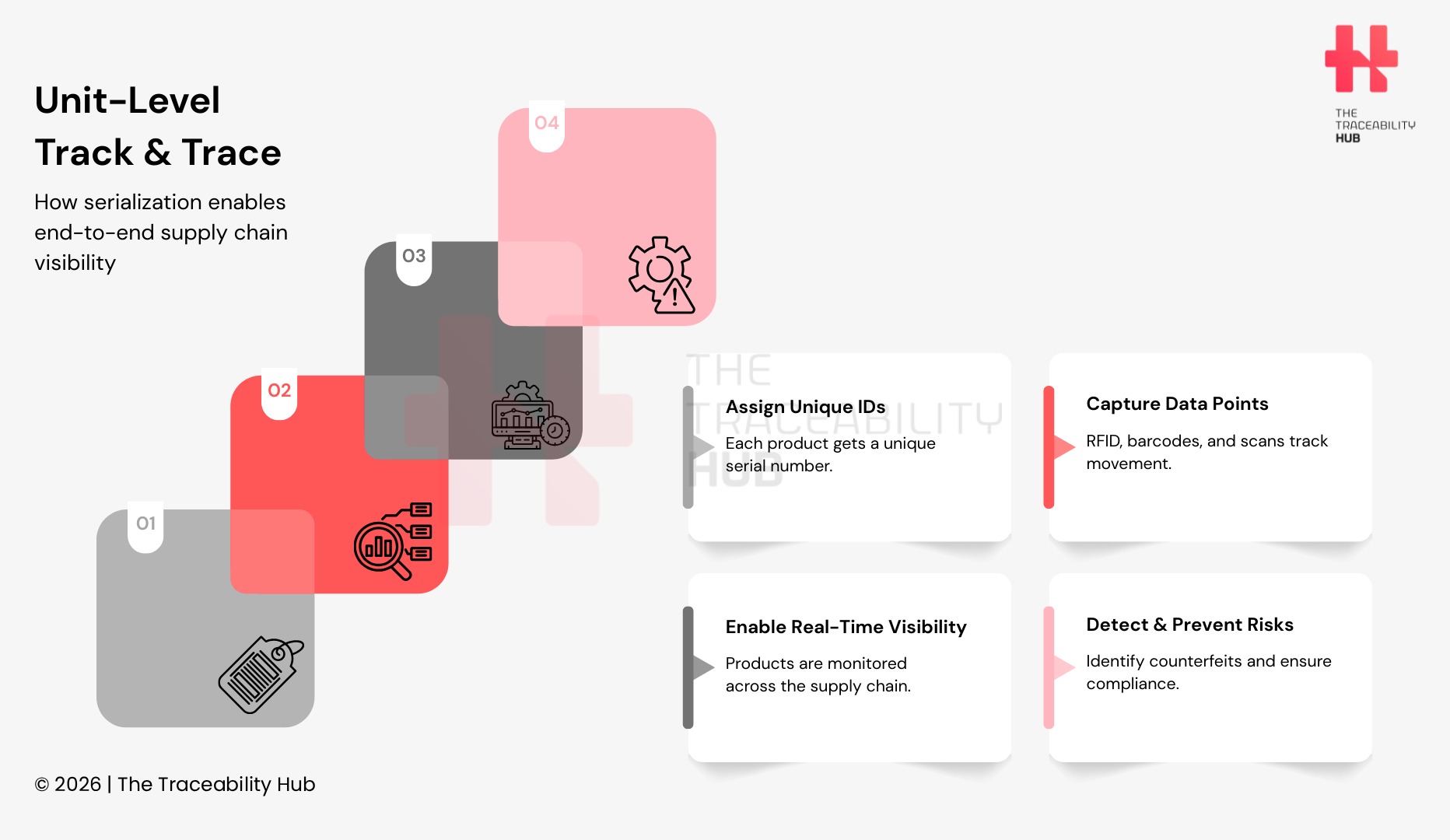
Unit-level traceability offers a more comprehensive approach to supply chain transparency. By assigning a unique digital identifier to each individual product unit, organizations can track and verify pharmaceutical products throughout their entire lifecycle, from manufacturing and packaging to distribution and dispensing.
Modern track-and-trace platforms integrate serialization data, regulatory compliance systems, and supply chain monitoring tools. These technologies help eliminate critical visibility gaps while enabling faster investigation of suspicious product movements.
This article explores how unit-level track and trace solutions address these challenges and deliver measurable improvements in pharmaceutical manufacturing traceability, logistics oversight, and distribution monitoring.
Understanding Supply Chain Blind Spots in Modern Distribution
Supply chain visibility remains a persistent challenge across industries. According to industry surveys, as many as 94% of companies report lacking full end-to-end supply chain visibility, highlighting how difficult it remains for organizations to monitor products and processes across complex global logistics networks. These gaps often stem from legacy IT systems operating in silos, preventing stakeholders from obtaining a comprehensive, real-time view of supply chain operations.
Blind spots typically emerge at specific points where organizations temporarily lose track of goods, conditions, or processes across the distribution network. These visibility gaps often occur during handoffs between facilities, in-transit periods, or between scanning checkpoints where supply chain data capture is limited. Information may also become fragmented when warehouse management systems (WMS) fail to communicate effectively with third-party logistics providers, or when transportation management systems (TMS) are not synchronized with inventory tracking platforms and supply chain monitoring tools.
The challenge becomes even greater when organizations rely on manual data reconciliation or disconnected reporting tools. Studies on spreadsheet usage suggest that a large majority of spreadsheets contain errors, highlighting the risks associated with manual data management in complex operational environments.
The financial consequences of supply chain disruptions can also be significant. Research from the McKinsey Global Institute suggests that companies can expect disruptions lasting a month or longer approximately every 3.7 years, with total losses potentially amounting to around 42% of one year’s EBITDA over a decade. Without integrated track-and-trace systems and real-time supply chain monitoring tools, organizations may struggle to detect problems early enough to prevent them from escalating into customer-facing disruptions.
Unit-Level Track & Trace
How Unit-Level Track and Trace Technology Works
Product serialization forms the foundation of unit-level traceability and modern product tracking systems. Serialization programs assign unique identifiers to individual product packages, enabling organizations to track each item throughout the supply chain. Every unit receives a distinct serial number, allowing precise monitoring from manufacturer to distributor, retailer, and in some cases the end user. These identifiers are captured and transmitted through multiple track-and-trace technologies deployed across manufacturing, logistics, and distribution networks.
Radio Frequency Identification (RFID) is one of the most widely used technologies for automated supply chain tracking. RFID tags use radio signals to transmit stored data without requiring a direct line of sight. Passive RFID tags draw power from a reader’s electromagnetic field, making them efficient for large-scale inventory and logistics tracking. Active RFID tags contain their own power source, enabling longer communication ranges for asset tracking and real-time monitoring systems. RFID readers can scan multiple tags simultaneously, which makes the technology particularly effective in high-volume warehouse environments where thousands of items must be identified quickly.
Near Field Communication (NFC) technology supports secure short-range interactions, typically operating within a few centimeters. This makes NFC useful for product authentication and consumer-level verification, since smartphones can read NFC tags without specialized hardware. In parallel, Data Matrix barcodes provide a compact and widely adopted solution for serialization. These two-dimensional codes can encode over 2,000 alphanumeric characters in a small symbol, and their built-in error-correction capabilities allow reliable scanning even if part of the code is damaged or partially obscured. For this reason, Data Matrix codes are commonly used for pharmaceutical serialization and regulated product identification.
In addition, emerging digital technologies are expanding the capabilities of track-and-trace systems. When needed blockchain platforms can provide distributed, tamper-resistant ledgers for recording supply chain transactions and product movements. Meanwhile, IoT sensors and smart devices placed at critical logistics points can feed real-time environmental and location data into cloud-based track-and-trace platforms. Together, these technologies enable continuous monitoring of individual product units across increasingly complex global supply chains.
Solving Critical Visibility Gaps Across Industries
Pharmaceutical manufacturers face growing pressure to strengthen unit-level traceability as substandard and falsified medicines continue to threaten patient safety. The World Health Organization estimates that around 1 in 10 medicines in low- and middle-income countries are substandard or falsified, highlighting the scale of the problem in global healthcare supply chains. In the United States, the Drug Supply Chain Security Act requires an interoperable, electronic system to identify and trace certain prescription drugs at the package level across the supply chain. These pharmaceutical track-and-trace systems enable trading partners to verify product legitimacy, investigate suspicious products more quickly, and respond more effectively to recalls.
Also, other industries are facing major and similar challenges.
In the automotive industry, manufacturing traceability plays a critical role in safety compliance and quality control. Standards such as ISO 26262 and frameworks like Automotive SPICE emphasize traceability between requirements, components, and testing processes. By maintaining detailed production and component records, manufacturers can identify defective parts earlier in the production cycle and narrow the scope of vehicle recalls. Component-level traceability also helps reduce operational downtime and improves compliance with global automotive safety requirements.
Food and beverage supply chains face similar traceability challenges. The FSMA Food Traceability Rule requires companies handling food on the Food Traceability List to maintain additional records tied to specific supply chain events. These requirements aim to improve outbreak investigations in a country where the Centers for Disease Control and Prevention estimates that 48 million people experience foodborne illnesses each year in the United States. Beyond food safety, traceability technologies also help address illicit trade across consumer product sectors. The World Health Organization estimates that around one-fifth of global alcohol consumption occurs outside regulated markets, while research from the Organization for Economic Cooperation and Development and the European Union Intellectual Property Office estimates that global trade in counterfeit goods reached roughly USD 467 billion in 2021, representing about 2.3% of global imports. Together, these challenges highlight why robust track-and-trace systems are becoming essential tools for improving supply chain transparency across industries.
How Serialization Improves Supply Chain Visibility
Unit-level track and trace technologies help address critical supply chain visibility gaps that can cost industries billions each year through counterfeiting, inefficiencies, and product recalls. Product serialization, combined with technologies such as RFID, NFC, IoT sensors, blockchain platforms, and Data Matrix barcodes, enables significantly greater transparency across pharmaceutical, manufacturing, and consumer goods supply chains.
Organizations that implement modern track-and-trace systems gain the ability to verify products at the individual item level, detect suspicious product movements, and respond more quickly to recalls or quality issues. These systems also support compliance with increasingly strict regulatory requirements while strengthening product authentication and supply chain oversight.
As global supply chains grow more complex, track-and-trace technologies are becoming essential tools for protecting brand integrity, improving operational efficiency, and enhancing patient and consumer safety.
Coming soon: EU Empowering Consumers Directive: Guide to Directive (EU) 2024/825 Compliance