Why Traditional Product Identifiers Are No Longer Enough
A product identifier used to do one job: tell a scanner what item was in front of it. That model is aging fast. The same pack now must answer questions from shoppers, retailers, service teams, marketplaces, and regulators. People want ingredient details, origin, care instructions, and recall information without hunting through brand sites. Operations teams want the same code to support traceability, returns, and faster exception handling.
According to the 2025 GS1 US consumer survey, 77% of consumers say product information is important when making a purchase, 79% are more likely to buy when a scannable code gives them additional product information, and 62% are willing to spend more for detailed product information. For that reason, GS1 Digital Link matters. Rather than adding another disconnected QR code to the pack, it turns a standards-based product identifier into a durable digital entry point for product information and online services.
Why Product Identifiers Need to Do More Today
The old packaging logic separated everything. The retail barcode handled checkout. A marketing QR code led to a campaign page. Service content lived somewhere else. Compliance files sat in another system entirely. That patchwork still appears in many organizations, but it breaks down as soon as the product needs to carry more than one digital job or provide connected product information.
A modern identifier must serve multiple audiences without forcing the brand to print multiple codes or maintain parallel destinations. A retailer may need the GTIN for point-of-sale (POS). A shopper may want ingredients, sustainability details, or instructions. A service team may need model-specific support content. A quality team may need batch-level context during a recall or complaint. When product identity remains static and disconnected from the web, every one of those needs creates another workaround.
What GS1 Digital Link Is
GS1 Digital Link sits at that intersection. It works as the GS1 standards layer that makes a GS1 identifier usable on the web, without replacing product-data governance or acting as a campaign device.
From Static Code to Web-Native Identifier
The GS1 Digital Link standard was first ratified in August 2018. Its core role is simple: it expresses GS1 identification keys in a web URI structure so they can link to online information and services. In practice, that means a product identifier such as a GTIN is no longer trapped inside a retail system. It becomes a resolvable address and a web-native product identifier.
That sounds technical, but the business implication is concrete. Instead of printing one code for checkout and another for digital content, brands can use a standards-based digital identity layer that is compatible with both operational and web uses. The identifier does not stop being a supply-chain asset. It becomes more useful because it can travel further across retail operations, product information systems, and digital services.
How It Connects Ids, URLs, and Product Data
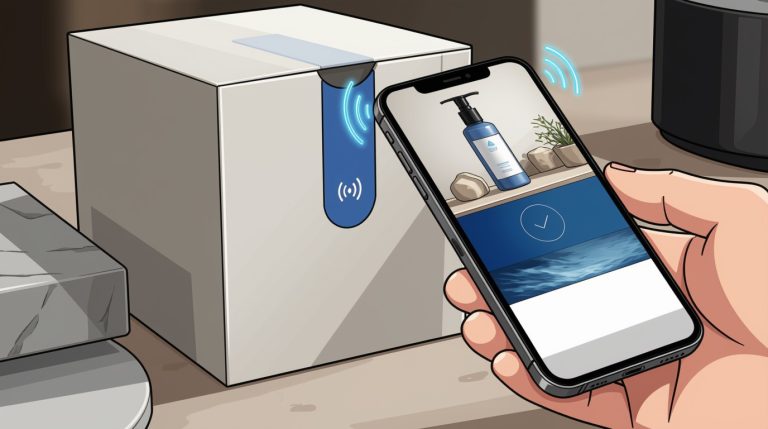
Digital Link works because it separates identity from destination. The identifier remains stable, while the route behind it can point the right user to the right content. That might be a product page, a usage guide, a traceability record, or a recall notice. The pack code does not need to change every time the product information changes.
This model is scaled because a static QR code usually points to one fixed web page, while a Digital Link-enabled code can connect the identifier to a governed data structure and resolver logic. In other words, the code does not merely open a URL. It opens a product-specific path into a system that can be maintained over time, supporting product data management and controlling digital information.
What Businesses Can Do with Digital Link
The real value appears when one identifier starts serving more than one workflow. Done well, Digital Link reduces duplication on pack and makes product information easier to manage across the lifecycle, while supporting connected product experiences.
Consumer Information and Transparency
For consumer-facing use cases, the advantage is obvious: one scan can surface content that is easier to update and easier to trust. That may include ingredients, allergens, care guidance, origin details, sustainability claims, or instructions for use. The same GS1 retail consumer engagement guidance notes that a QR Code with GS1 Digital Link syntax can both power consumer engagement and support point-of-sale and other business processes.
This matters because consumers are not asking for generic digital experiences anymore. They want product-specific answers at the moment of need. A code that opens relevant product information feels useful. A code that opens a generic landing page teaches people not to scan again.
Recalls, Compliance, and Service Updates
Digital Link also matters when the product record has to change after the pack is already in the market. A recall status can change. A service instruction can be updated. A compliance disclosure may need to be expanded. For higher-risk products, the GS1 retail POS implementation guideline also shows how 2D barcodes can carry more than the GTIN, including additional attributes such as batch or lot number and expiration date.
That does not make Digital Link a recall system by itself. It makes the product identifier more useful inside a broader product traceability or compliance process. The same physical code can support a product lookup at one moment and access to updated instructions or issue-specific information later.
Multiple Destinations from One Code
One of the most important capabilities is routing. The same identifier can support different destinations depending on context, user role, market, or application logic. A shopper may see care instructions. A retailer may extract POS data. A downstream partner may access a different service endpoint. A service team may land on the current support record.
That flexibility is easy to underestimate. Without it, every new use case creates another code, another content object, or another disconnected workflow. With it, product identity becomes the common starting point, and the destination logic becomes governable.
Why Digital Link Matters for GS1 Sunrise 2027 and DPP
Digital Link is becoming more strategic because the market around product codes is changing. GS1 Sunrise 2027 is the clearest retail milestone. GS1 US describes it as the transition from 1D UPC barcodes to 2D barcodes that can provide richer data, stronger product traceability, and more transparency across the supply chain, with the goal that retailers be ready by the end of 2027.
There is an important operational detail here. The GS1 retail guideline states that until 90% of POS scanning solutions can process a GS1-compliant 2D barcode and at minimum capture the GTIN, brands still need a linear POS barcode alongside the 2D code. So, Sunrise 2027 is not a switch that happens overnight. It is a barcode migration path.
Digital Link also matters in the context of future Digital Product Passport (DPP) models. The EU Ecodesign for Sustainable Products Regulation entered into force on July 18, 2024, and the European Commission has already clarified that Digital Product Passports will be part of the framework for regulated products. Digital Link is not the passport itself. But it is a practical way to connect a scannable product identity to governed online information, which is exactly the kind of capability DPP programs will depend on for product data and compliance information.
What Brands Need to Prepare
The first mistake is to treat Digital Link as a barcode-design project. The harder work sits underneath: product data governance, routing rules, and maintenance discipline.
Governance of Product Data
If the underlying product data is fragmented, Digital Link implementation will only expose that weakness faster. Brands need to decide which product attributes are authoritative, who owns them, how changes are approved, and how market-specific disclosures are controlled. Otherwise, the scan works, but the experience behind it is stale, contradictory, or incomplete.
That matters just as much for internal trust as for external trust. A product identifier becomes far more valuable when packaging, regulatory, service, and digital teams all work from the same governed object instead of publishing disconnected versions of the truth.
Content Routing and Maintenance
Routing logic also needs discipline. What should a consumer see? What should a retailer see? What changes by country, language, product variant, lot, or campaign? How are destinations updated when a webpage is retired or a disclosure rule changes? These are operating questions, not web-design details, and they are central to effective Digital Link content routing.
The brands that get this right usually avoid treating every scan as a marketing event. They build a maintainable resolution model instead: stable identity on pack, controlled destinations behind it, and a clear process for keeping content current over time.
Why Digital Link Is Becoming Foundational for Connected Products
Digital Link is becoming foundational because it solves a structural problem. Products now need to work as both physical goods and digital entry points. That only scales if identity, web access, and product data are tied together cleanly.
From this perspective, GS1 Digital Link is less about the code itself and more about what the code allows the product to do. It lets one identifier support retail operations, transparency, service, product traceability, and future compliance models without turning packaging into a cluttered stack of disconnected symbols. The practical takeaway is simple: the code on pack is no longer just a label. It is becoming an address.