Why Near Field Communication Matters for Connected Products
Near field communication is often reduced to a simple explanation: tap a phone, open a page, move on. That is true, but it misses why NFC technology has become strategically relevant for product teams, packaging teams, and supply chain organizations in the U.S. market. The value is not proximity alone. It is the combination of low-friction activation, a controlled physical touchpoint, and a data layer that can support product authentication, service access, and richer post-purchase experiences from the one interaction.
That distinction matters because many companies already have digital touchpoints on packaging. What they are evaluating now is not whether a product can connect to digital content, but which touchpoint creates the most reliable behavior, the best user experience, and the clearest operational upside. In that comparison, NFC sits naturally within broader connected packaging strategies and smart packaging approaches when the interaction needs to feel immediate, intentional, and tightly linked to the product itself.
What Near Field Communication Actually Does in Product Interactions
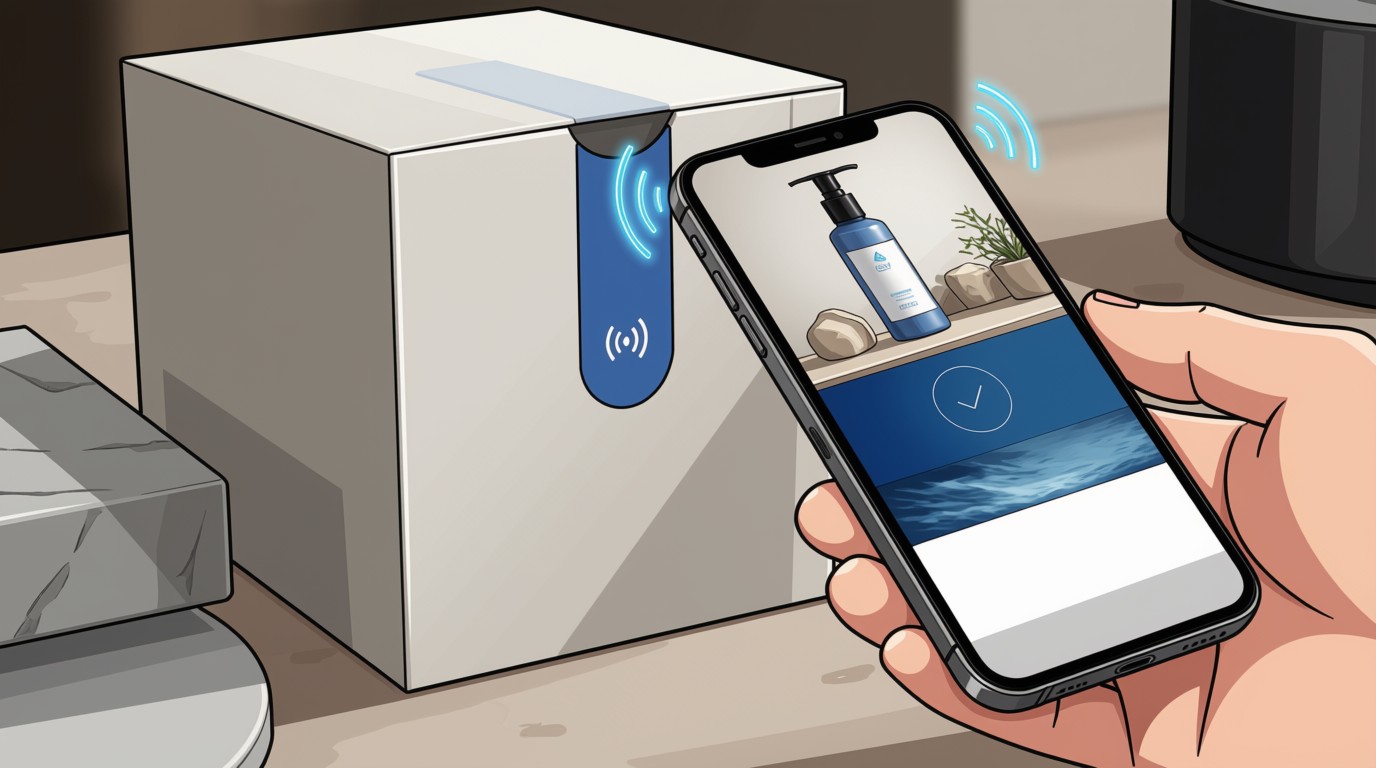
At a technical level, near field communication is a short-range wireless technology that enables data exchange between devices brought very close together. In practice, that usually means a smartphone interacting with an embedded NFC tag. The interaction happens with a tap or near-tap, removing the need to frame a code with a camera or rely on visible printed space.
NFC turns the package or product into a direct digital trigger. The user does not scan an image; they activate a physical digital touchpoint. That makes NFC useful wherever the object should act as the gateway to information, service, or product verification.
The standard has also continued to evolve. NFC Forum’s Release 15 expands the operating range for certified compliant connections up to 2 centimeters, compared with the earlier 0.5-centimeter baseline. That reduces failed interactions and makes NFC technology more practical in small devices, premium packaging and constrained designs.
For product interactions, the implications are practical. An NFC tag can route a user to product-specific content, unlock onboarding flows, surface service instructions, connect to warranty registration, or confirm product identity. When the tag is tied to a unique identifier and a governed data structure, the interaction becomes more than a convenience feature. It becomes a controlled bridge between a physical item and a live digital record, creating a direct physical-to-digital product connection.
Why NFC Is Different from QR Codes and Other Touchpoint Technologies
The most useful way to evaluate NFC vs QR codes is not to ask whether it is “better” than QR codes or other touchpoint technologies. It is to ask what kind of interaction the business needs.
QR codes remain highly effective for broad accessibility, low-cost deployment, and visible activation. They are easy to print, easy to update when dynamic, and familiar to users. For many campaigns, that is exactly the right choice. That is also why the shift toward GS1 2D barcodes matters in adjacent packaging conversations: the business question is increasingly about how one product touchpoint can carry identification, data access, and digital continuity. But QR activation still depends on camera use, framing, lighting, and the user recognizing that the printed code is there to be scanned.
NFC works differently. The interaction is shorter, more embedded, and often more premium in feel. Because the NFC tag can be hidden within packaging or a label, the brand has more freedom over visual design. Because the user only needs to tap, activation can feel easier in contexts where speed matters or where the package should not look crowded with printed instructions. This makes NFC packaging particularly relevant when brands want a more integrated product experience.
Tap-Based Access, Security, and User Convenience
This is where NFC becomes more than a marketing novelty. Tap-based access reduces physical friction in product interactions. A user can tap packaging to open a setup guide, confirm service eligibility, or retrieve care instructions without stopping to search manually. In after-sales contexts, that can improve the experience immediately because the product itself becomes the entry point to product support and service access.
Security also enters the discussion, but it has to be framed correctly. NFC is not secure by default simply because it is short range. The real question is how the tag is configured, what data is exposed, whether the interaction is tied to unique product identity, and what controls exist in the application layer. Some NFC tags support stronger security features and tamper-aware designs; others are much simpler. For that reason, teams evaluating NFC for authentication should separate the physical tap experience from the full trust architecture behind it.
What Brands Can Deliver Through An NFC-Enabled Touchpoint
When implemented well, NFC supports a wide set of experiences from the same NFC-enabled touchpoint. A single tap can open dynamic product information, activate ownership registration, connect to manuals or service videos, deliver loyalty content, or confirm an official destination tied to the product. The NFC Data Exchange Format, or NDEF, matters here because it provides the common structure that allows NFC-compliant devices and tags to exchange data consistently.
For U.S. brands, this matters beyond consumer engagement. If packaging leads to live digital destinations, content can be updated without the rigidity of printed material. If identity is product-specific rather than generic, post-purchase services can become more context-aware. And if the tap event is measured, teams can learn which digital touchpoints generate meaningful use after the point of sale.
Where NFC Creates the Most Value Across Product and Packaging Journeys
NFC creates the most value when the physical object should do more than identify itself. It should verify, initiate, or personalize. In these cases, NFC technology for products becomes part of a broader connected product experience rather than simply an additional communication channel.
One strong use case is product authentication. In categories exposed to counterfeiting, diversion, or trust-sensitive purchasing decisions, NFC can add a more intentional verification step than a visible printed code alone. That does not replace broader unit-level track and trace programs, but it can strengthen the last-mile interaction between product and user by making official digital access easier and more product-bound. In this context, NFC product authentication can complement broader product traceability and serialization strategies.
Another is after-sales service. Products that require onboarding, maintenance guidance, warranty support, refill programs, or service history can benefit when the entry point sits on the product itself. Users do not need to search a site, guess the right model page, or scan a generic manual. They tap the item and arrive in the right context faster, creating a more direct NFC-enabled product support experience.
Consumer engagement is the third area, but the strongest use cases are usually the least gimmicky. NFC works best when the digital layer delivers something useful: care guidance, provenance details, replenishment options, registration, premium content, loyalty benefits, or resale support. If the tap only launches a generic landing page, the technology rarely justifies itself. The strongest NFC consumer engagement experiences connect useful digital content directly to the physical product.
Authentication, After-Sales Services, and Consumer Engagement
These three areas share the same principle: NFC adds value when the interaction is tied to the item, not just the campaign. That is why technology is increasingly relevant in connected packaging and digital product strategies. It supports a shift away from one-way labels toward product touchpoints that stay useful after purchase, across the product lifecycle.
That is especially relevant in the U.S. market, where expectations around convenience and fast product support are high. A tap that reduces friction has operational value. A tap that connects to a governed product record can also support better service routing, more relevant product information, and a more connected post-purchase experience.
What Companies Should Evaluate Before Scaling NFC Programs
The wrong way to evaluate NFC is through novelty. The better starting point is operational fit and the intended product use case.
First, teams should define the job of the tap. Is the goal authentication, onboarding, service access, dynamic information delivery, loyalty activation, or something else? Without that clarity, the interaction becomes vague and the business case weakens. Defining the purpose also helps determine which NFC use case and product experience are most appropriate.
Second, they should decide whether the NFC layer is generic or item-specific. The closer the experience gets to verification, service entitlement, or traceability logic, the more important unique identity becomes. A static destination is easy to launch, but it delivers limited long-term value. An item-specific NFC tag can instead support a more connected digital product record and product-specific experience.
Third, they should assess user context. NFC performs best when speed, convenience, and physical-product intimacy matter. If the priority is mass access at the lowest possible cost, a QR-first model may remain more appropriate. Many brands will use both for different reasons, depending on the desired product touchpoint, audience and activation context.
Fourth, governance matters. Who manages the destination content? How are records updated over time? What happens when packaging remains in circulation for months or years? How is usage data collected, and what privacy expectations apply? A good tap experience depends on strong backend discipline, data governance and content management.
Finally, organizations should evaluate scalability in design and operations. Tag selection, reading reliability, NFC packaging integration, durability, analytics, and support workflows all influence whether NFC becomes useful infrastructure or an isolated pilot.
Near field communication is most valuable when treated that way: not as a clever add-on, but as a practical interface between the physical product and the digital systems around it. When the tap is connected to real product logic, NFC stops being a proximity feature and becomes a durable operational and brand asset, supporting connected products, digital product experiences, authentication, service access and data-driven engagement.